The post Amazon Product Image Size Requirements – The Ultimate Guide in 2026 appeared first on Grasigner .
]]>Our research shows that image requirements are a frequent cause of listing problems. Amazon uses automated systems to review images during the upload process. To ensure approval, product images must fully comply with Amazon’s listing guidelines from the outset.
Why Do Amazon Product Image Size Requirements Matter?

Images play a vital role in successfully listing products on Amazon. That’s why Amazon’s image guidelines emphasize photo quality. Every seller must follow these standards to ensure their listings meet platform requirements. Using high-quality images in the correct size and aspect ratio, with a clean, professional appearance, alongside a clear product description, can make the listing process smoother and more effective.
In addition, it offers several other long-term benefits that can add lasting value to your business.
Increase Conversion Rate
High-quality images play a key role in attracting buyers. They make your product stand out and increase visibility. However, not all photos are perfect; this is where professional editing becomes essential.
Get top-quality image clipping path service from us, pricing starts at just $0.29!
For Search Engine Optimization
Following Amazon’s image size requirements can greatly improve your search engine optimization. When your images have the right size, format, shape, and color, your products are more likely to rank higher in search results, leading to increased visibility and more traffic to your listings.
Product Comparison
Photos are essential on competitive platforms like Amazon. That’s why Amazon’s photo requirements are designed to simplify the process for sellers. Meeting these standards not only helps attract customers but also gives you a competitive edge when comparing your product with similar brands and models.
Drive Traffic to Website:
To drive more traffic to your site, it’s important to focus on image file size during optimization. Properly sized images improve user experience, keeping viewers engaged on your product page and guiding them toward your website. When done right, this also helps boost your visibility on Amazon.
Images Tell Stories
A common saying is, “A good product is shown through good images.” When your main image is clear and supported by additional views, such as angle shots, infographics, lifestyle photos, or videos, you showcase professionalism and communicate your brand’s message. Together, these elements influence and inspire customers to make a purchase.
What are the image requirements for Amazon?
Amazon has set specific guidelines for images uploaded to its platform, and it is essential for all sellers to adhere to these requirements.
General Requirements For All Images
- Product images must be in full color, not black-and-white.
- The image should accurately represent the product and match the product title.
- The product should cover at least 85% of the frame.
- The image must showcase a clear, frontal view of the product.
- Images must be at least 1600 pixels on the longest side to enable zoom. This allows online shoppers to hover over your image and see a close-up view of the product through a magnifying lens.
- If the main image features a model, their posture should be upright, avoiding seated, kneeling, or other non-standing positions. This guideline does not apply to assistive technologies, such as prosthetics.
Image File Name
The file should be named on Amazon as follows:
Product identifier
Product identifiers should not contain special characters such as dashes or underscores, as these may cause upload issues. Accepted product identifiers include:
- ASINs (Amazon Standard Identification Number)
- ISBN-13 (International Standard Book Number)
- UPC (Universal Product Code)
- EAN (European Article Number)
- JAN (Japanese Article Number)
- 4 character variant (Optional)
To upload additional product images, sellers must include a 4-character variant code in the image file name. This code specifies the type of image being uploaded. Here’s a list of this-
File extension
The file extension indicates the file type, such as .jpg or .jpeg. However, the file type and image type are distinct. For example, you can change a .jpg interior shot to a .tiff interior shot, altering the file type but not the image type.
- Each separate element should be divided by a period.
Amazon Logo, Trademark & Badges
Product images submitted by sellers must not feature logos, trademarks, or any variations or imitations of Amazon, Alexa, Prime, or the Amazon Smile design. This also includes badges like-
- Amazon’s Choice
- Premium Choice
- Amazon Alexa
- Works with Amazon Alexa
- Best Seller
- Top Seller, etc.
Amazon Product Image Categories
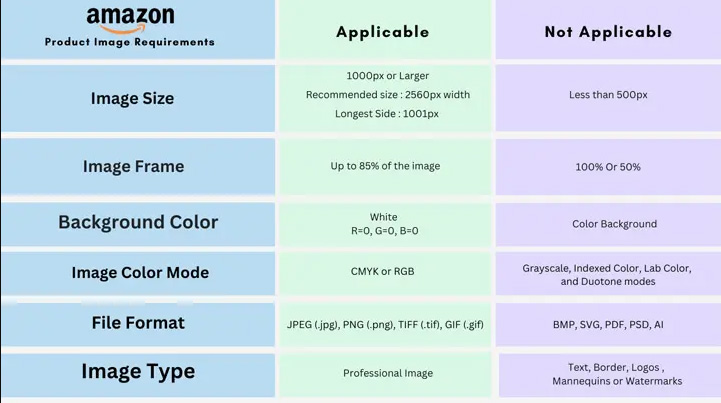
Amazon requires various types of images for product listings. To make things easier, I have organized each image type separately for your convenience. Let’s explore the requirements for each one.
1. Amazon Main Image Requirements
When a shopper searches for a product on Amazon, the first image they see is the main, or hero, image. It appears not only in search results but also on the browse and product detail pages.
The item shown in the hero image is the parent product. When capturing this image, sellers must be careful, as Amazon has specific guidelines in place to ensure quality and consistency. Take a look at Amazon’s hero image requirements-
- The image must be a professional photograph of the actual product.
- Only one product should be clearly in focus.
- The product must be fully visible within the image frame.
- The background must be pure white (RGB 255, 255, 255).
Prohibition
- Graphics, drawings, illustrations, or placeholders cannot be used as the main image.
- Text, borders, inset images, color blocks, logos, or watermarks are not allowed.
- Main images must not show partial shots or multiple angles of the product.
- Products must not touch the frame edges or appear cut off.
- Items inside packaging (boxes, bags, etc.) are not allowed unless the packaging highlights key features.
- Animated .gif files are not permitted.
- Blurry or pixelated images will be rejected.
- Brand logos or promotional text cannot appear in the image.
- Offensive or inappropriate content is strictly prohibited.
2. Amazon Additional/Supporting Image Requirements
Amazon allows sellers to upload up to nine product images, with seven typically displayed on the product listing page. Aside from the main image, the remaining ones are known as additional or non-primary images. These images, sometimes called variants, help showcase product features such as details, materials, styles, and other important aspects.
3. Amazon Swatch Image Requirement
Swatch images are small thumbnail visuals that appear next to the main image on a product detail page. These images, often referred to as ‘child’ variations, represent different options of the main product, such as colors, patterns, or styles, offering customers a quick view of available choices.
- Resolution: Swatch images should be 72 pixels per inch (ppi) for optimal clarity on the product detail page.
- Size: Each image must be at least 30 pixels on its longest side to ensure visibility.
- File Format: The recommended file format for swatch images is JPEG (.jpg) for best compatibility and performance.
4. Amazon Product Video
Amazon now allows product videos to be displayed directly on the product detail page, alongside additional images. These videos make it easier to showcase key features and give customers a clearer understanding of the product in use.
Here are the requirements for uploading videos:
- Eligibility: Video uploads are available exclusively for brands registered through the Amazon Brand Registry Program.
- Acceptable Formats: Supported video formats include .mov and .mp4.
- Video Quality: Sellers are encouraged to upload videos in high definition (up to 1080p) for an optimal viewing experience.
- File Size: The maximum allowed video file size is 5GB.
- Thumbnail Image: A thumbnail is automatically generated for each video. To customize it, a high-quality .jpg or .png file must be uploaded.
Prohibited Content:
- Videos cannot contain links, URLs, or calls to action (CTAs).
- Uploaded videos cannot be edited once live. Any changes require re-uploading a new video.
- Bulk video uploads are not supported.
- Videos cannot be removed once uploaded.
How to optimize product search terms
Search terms are keywords that are crucial to creating effective, engaging product page content. These terms help Amazon index relevant keywords associated with the product, improving its visibility. While shoppers don’t see these terms directly, they are stored in the product listing’s backend. Proper use of search terms enhances your product’s discoverability, boosting its ranking on search results pages.
- Only include broad, general keywords relevant to the product.
- Skip hyphens, colons, and other punctuation marks.
- Repeating the same words within the search terms field should be avoided.
- Choose either the singular or plural form of a word; there’s no need to include both.
- You may use all lowercase letters for search terms.
- Include abbreviations, alternative names, spelling variations, and relevant phrases for better coverage.
Amazon’s Industry Specific Guidelines
Since not all products are the same, certain items require special attention during the shoot. This section is dedicated to highlighting those cases and ensuring the necessary care is taken.
a. Apparel Products
- The main image for clothing must be either on-figure (worn by a model) or presented using a flat lay.
- When using a human model, the main image should only show from the nose down. Additional images may include the model’s face.
- A solid-colored, flesh-toned, and transparent mannequin should be used for displaying apparel.
- For ghost mannequin images, garments must be fully visible, cropping or obscuring any part of the clothing is not permitted. Simply removing the mannequin is not acceptable.
- Adult clothing must be photographed on a model.
- In on-figure main images, the model should stand in a natural pose that clearly displays the entire garment.
- The model’s hair should be styled behind the shoulders to ensure the clothing remains fully visible.
- Children’s and infants’ apparel must be photographed without a model.
- Multi-pack clothing or accessories should be captured using off-figure or flat-lay techniques.
- Images must be high-resolution at 72 DPI (dots per inch)
Recommended camera settings:
- Aperture: F8 to F11
- Shutter Speed: 1/160 to 1/1000 seconds
- Mannequin parts should not be visible in product images; only the clothing should appear.
- Do not include props, such as food or unrelated items, in main images featuring a model unless they are part of the product.
- Use props and accessories in supporting or additional images only to enhance the presentation.
- Do not use the ghost mannequin effect in the main (hero) image; it is allowed only in secondary images.
- Do not display second-hand or previously used products in any images.
b. Shoes
- The main (hero) image must feature a single shoe, angled at 45 degrees to the left.
- A pair of shoes should not be shown in the hero image; only one shoe is allowed.
c. Jewelry
- The main image must clearly display the entire piece of Jewelry.
- You may display necklaces using cropped or partial images, provided the design remains fully visible.
- Do not use images in which the Jewelry is cut off or positioned too close to the frame.
d. Books, Videos
- The main image should feature the cover art clearly and fill the entire frame.
- Do not show products wrapped in jewel cases, cellophane, or with promotional stickers.
How Do Amazon Photos Work?
Once you’ve uploaded images that meet Amazon’s image guidelines, you’re setting the foundation for making the most of your product listings.
These images play a key role in your product description and help improve visibility in search results. When shoppers search using general keywords or phrases, Amazon’s algorithm often shows product images first, making them the initial point of engagement.
High-quality, sharp, and clearly visible photos are more likely to catch the eye of potential buyers. While additional product details support the purchase decision, it’s the images that do the heavy lifting in attracting interest and driving conversions.
Best Practices For Amazon Product Listing Images
Product images must represent the actual item, as 22% of returns are due to differences between the product and how it appears in photos.
High-quality, clean, and professional-looking images create a stronger impression and build trust with shoppers. To achieve this level of visual appeal. Make sure to follow these key practices:
1. Follow Amazon’s requirements
Adhering to Amazon’s requirements is essential for success as a seller on the platform. When sellers upload images that do not meet these standards, Amazon often removes them over time. From a professional standpoint, failing to follow these guidelines can negatively impact your credibility and business.
Final Reminder: Key Actions to Take
- Focus on optimizing your product page.
- Ensure your images meet all technical requirements.
- Strictly follow Amazon’s image standards.
2. Single Product in the Hero Image
Your hero image should feature only the main product, without any additional clutter in the frame. As the primary visual representation of your product, the main image plays a crucial role in capturing potential buyers’ attention. Ensure it is clear, well-lit, and visually appealing. To stay safe, take note of what top sellers in your category are doing on Amazon for guidance.
3. Genuine diversity
Sellers can showcase product variations in the main image. However, it is essential that the product remains the focal point, set against a clean, white background to maintain clarity and focus.
Media-Amazon has highlighted this approach effectively. For example:
Sellers have the flexibility to showcase their products creatively, as long as the product remains the focal point and complies with Amazon’s guidelines. Amazon permits the presentation as long as it remains authentic and realistic.
4. Multiple shots
A common mistake many sellers make is not providing enough images. While Amazon allows up to 9 images per listing, simply uploading them isn’t enough. Each image should offer a comprehensive view of the product, highlighting its features and functionality to give potential buyers a complete understanding.
5. Enabling Zoom
Since online shoppers cannot physically interact with products, the ability to zoom in on images has become a highly effective way to boost sales. This feature allows customers to examine products up close, offering a more realistic perspective. As a result, it plays a key role in increasing click-through rates (CTR).
6. Good quality photos
All your efforts will be in vain if the images don’t meet high standards. Hiring a professional product photographer is often the best way to ensure your photos are of top quality and effectively showcase your products.
Perfection may be difficult to achieve, but you can correct imperfections effectively. Even if your photos aren’t flawless, there are technical solutions to enhance them and meet the required standards. This is where a professional photo editing service comes in. Ensure you have the best tools and resources to showcase your products effectively.
7. A/B Testing
Before finalizing your images, it’s important to run a final test called A/B Testing or Split Testing. This test helps determine which images generate the best response from potential buyers.
Even small adjustments can significantly impact performance, and A/B testing allows sellers to identify the most effective images for maximum engagement.
Final Thoughts
Meeting Amazon’s product image size and quality requirements in 2026 is not just about avoiding rejections—it’s about building trust, improving visibility, and increasing conversions. When your images follow Amazon’s guidelines, they load faster, display better, and help shoppers clearly understand what they are buying. From the hero image to supporting visuals and videos, every image should accurately and professionally represent your product.
If creating perfect images feels challenging, remember that photography and editing go hand in hand. The right strategy and professional support can enhance even standard images to meet Amazon’s strict quality standards. At Grasigner, we help sellers present their products at their best with professional image editing that aligns with Amazon’s requirements. Follow the guidelines, focus on quality, test what works, and let your images do the selling for you.
The post Amazon Product Image Size Requirements – The Ultimate Guide in 2026 appeared first on Grasigner .
]]>The post What Is The Standard Image Size for eCommerce? Professional Guide 2026 appeared first on Grasigner .
]]>High-quality visuals play a critical role in influencing buyer confidence. In fact, 90% of shoppers admit that the quality of product imagery directly impacts their purchasing choices, while 30% say they would forgo a purchase altogether if product images are poor or absent.
To effectively showcase your products and maximize conversions, professional imagery is essential. Equally important is understanding how to strategically integrate and optimize these images throughout your Ecommerce store. This comprehensive guide will walk you through everything you need to know from selecting the ideal ecommerce product image sizes and formats to effortlessly resizing your visuals and applying best practices to ensure your product photos captivate and convert.
Why is image size important for ecommerce products?
Your Ecommerce store has various pages, each page featuring images of different sizes. It helps to have the right dimensions to ensure a clean, professional look. Optimizing image sizes not only enhances your store’s visual appeal but also provides customers with clearer product views, creating a more engaging shopping experience and helping turn visitors into loyal buyers.
Here’s top three main reasons why getting the image size right matters:
Improves page loading speed
One of the biggest frustrations in online shopping is slow-loading eCommerce websites. Pages that lag not only waste valuable time but also create a poor browsing experience. In most cases, oversized image files are the primary cause, significantly slowing down product pages and leading to abandoned carts and lost sales. By optimizing your images for the perfect balance between file size and quality. You can ensure faster load times across all devices, improving user experience and boosting conversions.
Boosts user experience
When shopping online, customers rely heavily on product images to connect with what they’re buying. The appearance of your products plays a crucial role in shaping customer perceptions and influences their purchasing decisions. Using the correct image sizes ensures that visuals remain sharp and undistorted, enhancing user experience and enabling smooth, confident navigation throughout your store.
Improves search engine ranking
Achieving a presence on the first page of search engine results is essential for maximizing your business’s online visibility. Every day, billions of users turn to search engines to find answers and products, typically engaging with the top results. Optimizing your image size and quality plays a key role in enhancing site performance, boosting visibility, and driving more traffic to your store.
2026 Platform-Specific Product Image Size Requirements
As eCommerce continues to evolve in 2026, staying updated with the latest product image size requirements is more important than ever. Each major platform updates its guidelines to improve visual quality, page speed, and customer experience. Whether you sell on Amazon, Shopify, social media, or Google Shopping, using the correct image sizes directly impacts visibility, trust, and conversions.
Amazon Product Image Guidelines
Amazon enforces strict product image standards to maintain a clean and professional marketplace.
- Minimum size: 1000 × 1000 pixels (enables basic zoom)
- Recommended size: 1600 × 1600 pixels or larger for sharper zoom
- Maximum size: Up to 10,000 pixels on the longest side
- Supported formats: JPG (preferred), PNG, TIFF, GIF
- Background: Pure white (RGB 255, 255, 255)
- Product coverage: Must fill at least 85% of the image frame
Amazon does not allow watermarks, text, logos, or promotional graphics. Images that fail to meet these standards may cause listing suppression or removal. Following Amazon’s eCommerce product image size guidelines is essential to protect visibility and maximize sales performance.
Shopify and Other eCommerce Platforms
Shopify allows more flexibility but strongly recommends consistent, high-quality product images for the best shopping experience.
- Recommended size: 2048 × 2048 pixels for clear zoom and detail
- Maximum file size: 20MB (under 3MB is ideal for fast loading)
- Aspect ratio: 1:1 (square) for product listings
- Banner sizes: Typically 1200–2500 × 400–600 pixels
Platforms like WooCommerce and BigCommerce follow similar image size standards. Always review the latest platform documentation, as requirements may change. Oversized images can slow your store, while inconsistent sizing can break visual consistency and reduce user trust.
Social Commerce Image Sizes: Instagram, Facebook & Pinterest
Social commerce continues to grow rapidly in 2026, making proper image sizing critical for engagement and ad performance.
- Instagram: 1080 × 1080 pixels (square posts)
- Facebook Shops: Minimum 500 × 500 pixels; 1024 × 1024 pixels recommended
- Pinterest: 1000 × 1500 pixels for vertical pins
Using the correct eCommerce product image size across social platforms helps maintain a strong brand presence, improves engagement, and increases click-through rates. Always preview images before publishing to avoid unwanted cropping or quality loss.
Ecommerce Products image size guidelines (overview)
Three main factors affect the size of images you upload to Ecommerce Products: Site theme, platform limits, and the purpose of your image.
Site theme
While all Shopify themes support image integration into product listings, each theme may have specific image size requirements. Non-compliance with these guidelines can lead to issues such as image cropping or distorted displays. Furthermore, many themes include built-in image optimization tools that help preserve image quality and ensure seamless site performance.
Image requirements E-commerce Store:
- E-commerce Store recommends keeping images within the following specifications:
- Maximum image dimensions: 4472 x 4472 pixels or 20 megapixels
- Best size for square photos: 2048 x 2048 pixels
- Maximum image file size: 20 MB
To enable zoom on product images, make sure they are at least 800 x 800 pixels. Smaller images won’t support zoom.
The platform automatically resizes images that exceed the permitted dimensions to ensure they conform to the specified limits. Additionally, the number of media files you can upload to your store varies depending on your Ecommerce plan. Ecommerce Basic supports up to 250 images, Ecommerce for Small Businesses allows up to 1,000, and Advanced Ecommerce permits up to 5,000 images per product.
Image purpose
The dimensions of your images should align with their intended purpose. Below is a detailed overview of the recommended image sizes for various types of visuals on Shopify eCommerce stores:
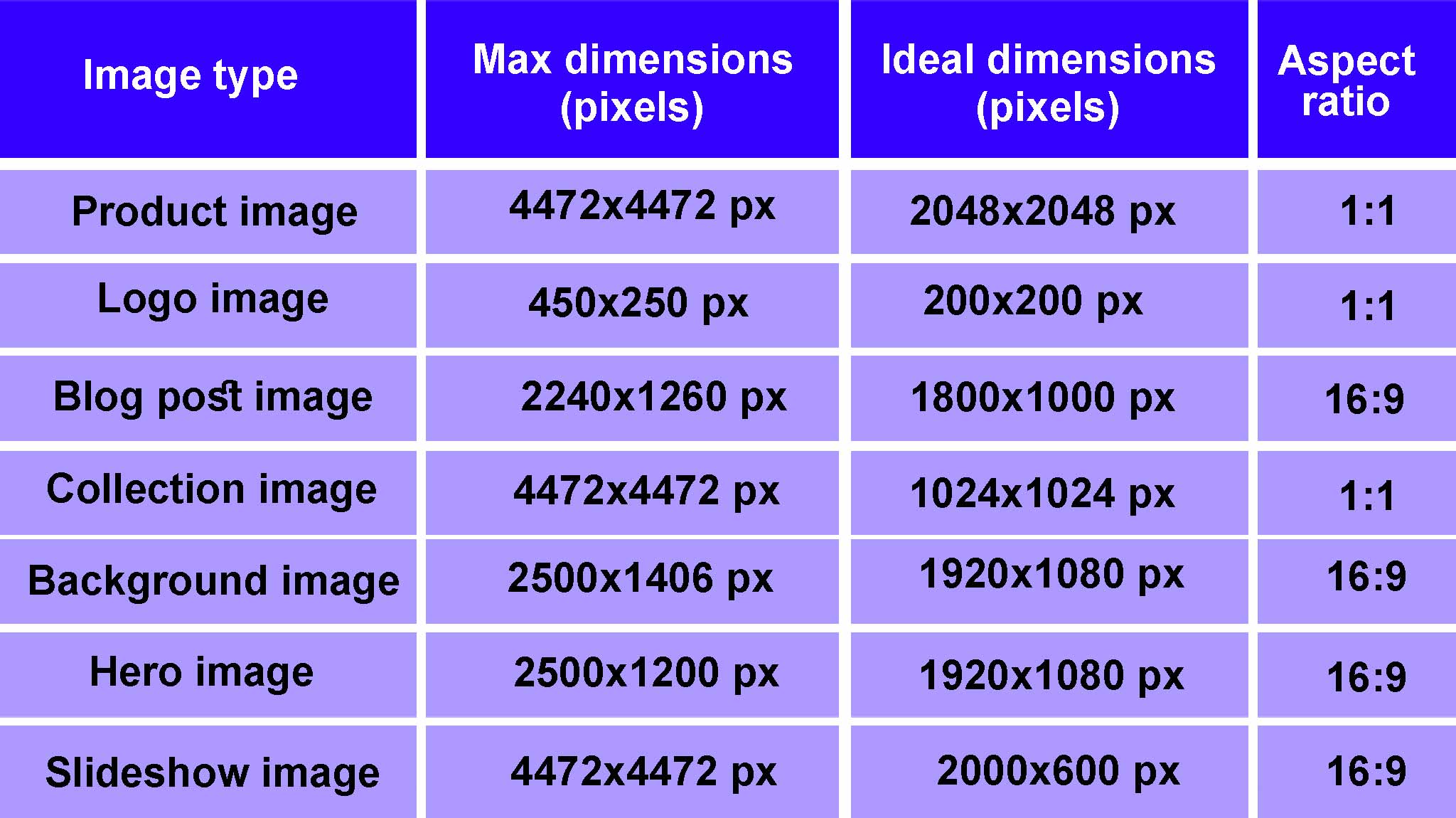
Best Ecommerce Product Image Sizes
Let’s explore the optimal image dimensions for various ecommerce product elements, including product images, blog visuals, collection covers, background graphics, hero sections, slideshows, banners, and logos.
Keep in mind that individual themes may have specific size requirements. To ensure the best visual results and performance. Always consult your theme’s guidelines and specifications.
Ecommerce product image size
When uploading product images to your Ecommerce store, strive for exceptional quality and visual consistency. Providing high-resolution, zoom-capable images allows customers to thoroughly inspect product details, enhancing their online shopping experience and fostering greater confidence in their purchasing decisions.
- Maximum image size: 4472 x 4472 pixels
- Ideal image size: 2048 x 2048 pixels
- Aspect ratio: 1:1 (square images) or 3:1 (rectangular photos)
- Maximum file size: 3 MB
Ecommerce logo image size:
Logo images are typically small-sized, but it plays a vital role in establishing brand identity across your Ecommerce store. As they appear consistently on every page, it’s essential to select dimensions that ensure clarity and scalability across various themes, devices, and screen resolutions.
- Maximum image size: 450 x 250 pixels
- Ideal image size: 200 x 200 pixels (square)
- Aspect ratio: 1:1 (square) and 2:3 or 4:1 (rectangular)
- Maximum file size: 1 MB (ideally smaller)
The Tofino Soap Company employs a clean, text-based logo positioned centrally on their website, presented within a rectangular aspect ratio.
Ecommerce blog image size:
Blog images are typically two categories: featured images and inline images within the blog content. Their dimensions may vary depending on your theme and the visual impact you wish to achieve.
Inline images should align seamlessly with the blog’s text column, commonly around 600 pixels in width. While maintaining moderate aspect ratios to avoid overshadowing the content. Featured images, displayed as thumbnails or headers, should be uniform in size across all posts to maintain a cohesive, visually consistent blog experience.
Here are the featured image guidelines for blog posts are as follows:
- Maximum image size: 2240 x 1260 pixels (width x height)
- Ideal image size: 1800 x 1000 pixels (1.8:1 aspect ratio)
- Aspect ratio: 16:9
- Maximum file size: 3 MB
Ecommerce collection image size
Collection images serve as visual gateways to product categories, offering customers an immediate glimpse into the range of items within each group. These images enhance navigation, helping shoppers quickly identify and explore products that align with their interests.
- Maximum image size: 4472 x 4472 pixels
- Ideal image size: 1024 x 1024 pixels
- Aspect ratio: 1:1 (Square)
- Maximum file size: 20 MB
Ecommerce banner image size
Banner images vary in size and format, tailored to your specific requirements and website layout. Typically featured in promotional sections across your store, they play a key role in capturing attention. As a leading authority in digital advertising, Google recommends the following banner sizes for optimal performance on your site:
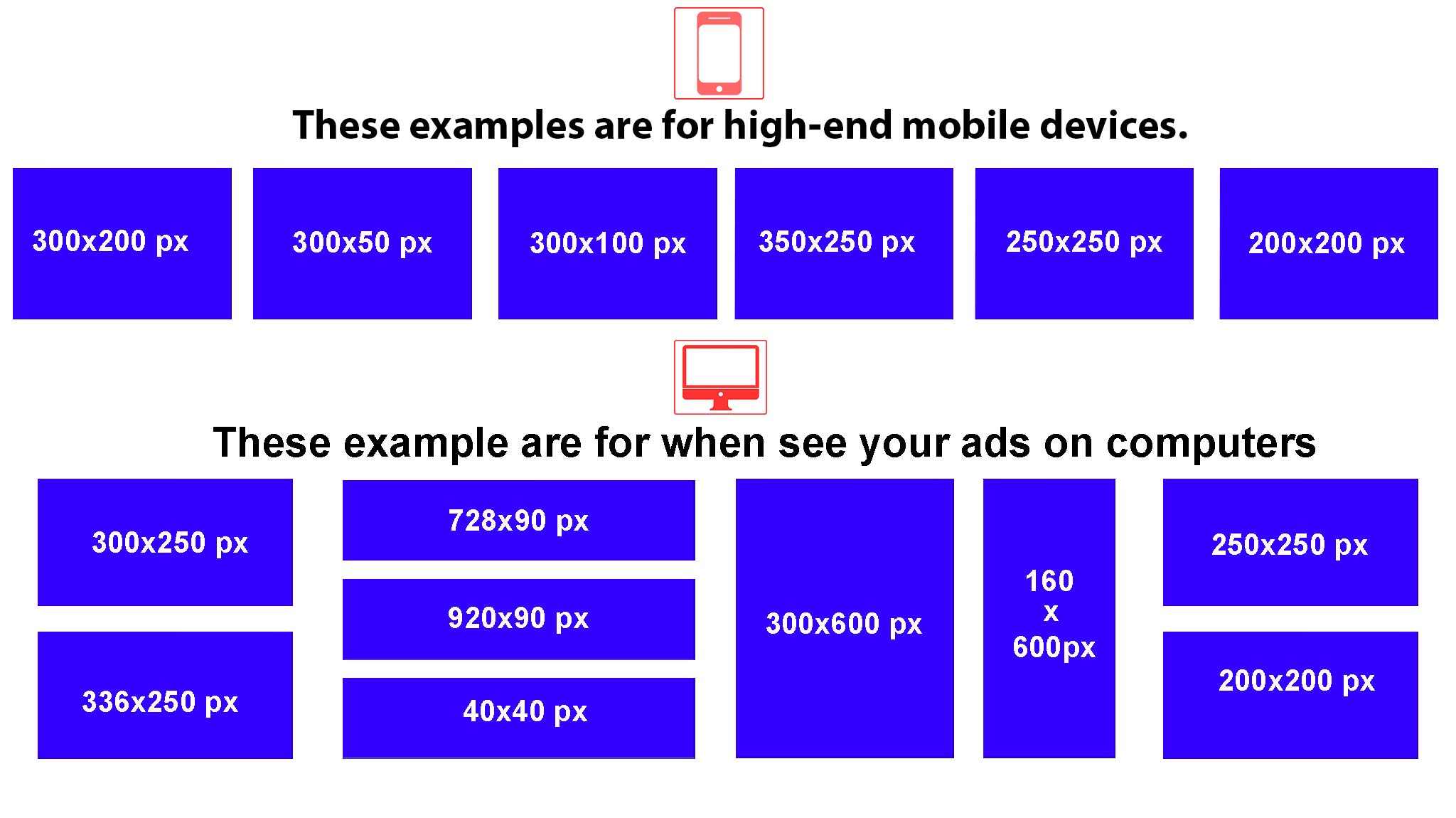
Ecommerce background images
When choosing or designing your background image, prioritize simplicity and clarity to ensure a seamless user experience. Ecommerce platforms typically resize background images for smaller screens, meaning the image may appear differently across various devices.
- Maximum image size: 2500 x 1406 pixels
- Ideal image size: 1920 x 1080 pixels
- Aspect ratio: 16:9
- Maximum file size: 20 MB
Ecommerce hero image size
Hero images are prominent, visually striking images featured at the top of your homepage. Often referred to as non-ad banners, they are sometimes confused with background images. However, the key distinction is that hero images are generally shorter, typically about half the height of a background image. Designed to adapt to various screen sizes, hero images should be optimized for the largest screen resolution (1920 x 1080 pixels for desktop) to ensure crisp, high-quality visuals across all devices.
- Maximum image size: Between 1280-2500 pixels (width) and 720-1200 pixels (height)
- Ideal image size: 1920 x 1080 pixels
- Aspect ratio: 16:9 (landscape orientation)
- Maximum file size: 10 MB
Ecommerce slideshow image size
Slideshow images cycle through a series of visuals and are typically featured on the homepage or product pages. To maintain design cohesion and visual appeal, ensure all images in the slideshow share consistent dimensions or aspect ratios.
- Maximum image size: 4472 x 4472 pixels
- Ideal image size: 1200-2000 pixels (width) x 400-600 pixels (height)
- Aspect ratio: 16:19 (Adjust to either fill the above-the-fold space or allow other sections to appear below the slideshow without scrolling)
- Maximum file size: 20 MB
How to prepare and edit your images for Ecommerce Products
Excellence in product photography is a cornerstone of successful e-commerce. High-quality, authentic images not only elevate the perceived value of your products but also attract your ideal customers, turning them into loyal advocates for your brand. This, in turn, drives revenue growth and fosters a reputable business presence.
To improve the effectiveness and impact of your product images, invest time in both capturing clear, high-resolution photos and utilizing AI-driven editing tools for refinement before uploading to your Ecommerce store.
Take clear product pictures
When capturing your product photos, follow these expert tips for better results:
- Use natural light or invest in a professional lighting kit to capture more captivating shots.
- Clean your camera lens to eliminate blurry images.
- Keep the product in sharp focus to enhance image clarity and highlight fine details.
- Use a tripod to stabilize your camera and minimize motion blur for consistently crisp photos.
- Capture multiple angles to provide editing flexibility and a more complete visual representation of the product.
- Set your camera or smartphone to high resolution to ensure maximum image quality, enabling greater detail and sharper results.
It’s important to keep in mind that higher-resolution images typically result in larger file sizes, which can impact your website’s loading speed. To balance image quality with performance, consider the following optimization strategies:
- Follow Shopify’s recommended image dimensions to ensure proper display and alignment across your store’s layout and devices.
- Conduct A/B testing to identify the optimal balance between image quality and file size, tailored to your target audience’s preferences and behavior.
- Leverage AI-powered compression and optimization tools to minimize file sizes while preserving visual quality, improve site performance without compromising aesthetics.
Ecommerce product image size FAQ
What is the best size for product images on Ecommerce Store?
For optimal clarity and functionality, Ecommerce store recommends using square product images sized at 2048 x 2048 pixels. Image dimensions should not exceed 4472 x 4472 pixels and should remain above 800 x 800 pixels to retain the zoom feature. It’s also important to note that different image types across your store.
Why are my ecommerce product images blurry on mobile?
If your Shopify images appear blurry on mobile devices, it’s likely because you uploaded them at low resolution. To maintain visual clarity, ensure your product images fall within the recommended range of up to 4472 x 4472 pixels. Additionally, be mindful that some themes may have specific image size requirements. So it’s essential to review and follow your theme’s design guidelines for optimal results.
What is the best file size for optimum speed on an Ecommerce Product?
To ensure faster page loading and optimal site performance, it’s recommended to keep image file sizes within Shopify’s 20 MB limit. So, use image compression and optimization tools to effectively balance visual quality with manageable file sizes.
Why are my product images different sizes on Ecommerce stores?
The sizes of your images dimensions can cause visual discrepancies across your store. To maintain a cohesive appearance, resize or crop your images to a uniform set of dimensions before uploading. Also, check your theme settings to determine if automatic resizing is applied, and make any necessary adjustments to ensure optimal presentation.
The post What Is The Standard Image Size for eCommerce? Professional Guide 2026 appeared first on Grasigner .
]]>