
In the booming world of online retail, product photography is more than just a visual—it’s your sales ambassador. Since customers can’t touch, feel, or try products in person, the quality of your images directly influences buying decisions, brand perception, and ultimately revenue. Every image must clearly and convincingly communicate the product’s features, quality, and value.
Whether you’re an aspiring photographer, an eCommerce entrepreneur, or a small business owner, understanding the essentials of eCommerce product photography in 2025 can help you create visuals that truly convert. This guide provides a comprehensive roadmap—from equipment and lighting to editing, marketing, and client acquisition—so you can build a successful eCommerce photography business.
1. Essential Equipment for Product Photography
Having the right tools doesn’t always mean investing in expensive gear. What matters most is achieving sharp focus, accurate detail, and consistent results.
Cameras
- DSLR Cameras: Popular entry-level options like the Nikon D3400 or Canon EOS Rebel series are ideal for beginners, offering manual control over aperture, shutter speed, and focus.
- Mirrorless Cameras: Compact, lightweight, and powerful, these cameras are perfect for tabletop photography and portability.
- Smartphones: Modern smartphones with high-resolution cameras can also produce professional-grade images when paired with proper lighting and stabilization.
Lenses
- Kit Lens (18–55mm): Versatile for general product photography.
- Macro Lens: Best for capturing fine details of small products such as jewelry, electronics, or cosmetics.
- Prime Lens (50mm): Offers excellent sharpness and low-light performance for creative shots.
Tripods and Stabilizers
A stable tripod is essential for sharp, well-composed images. Look for tripods with adjustable height and horizontal arm features for overhead shots. Avoid hand-holding the tripod during extended shoots, as even minor shakes can affect image quality.
Reflectors and Accessories
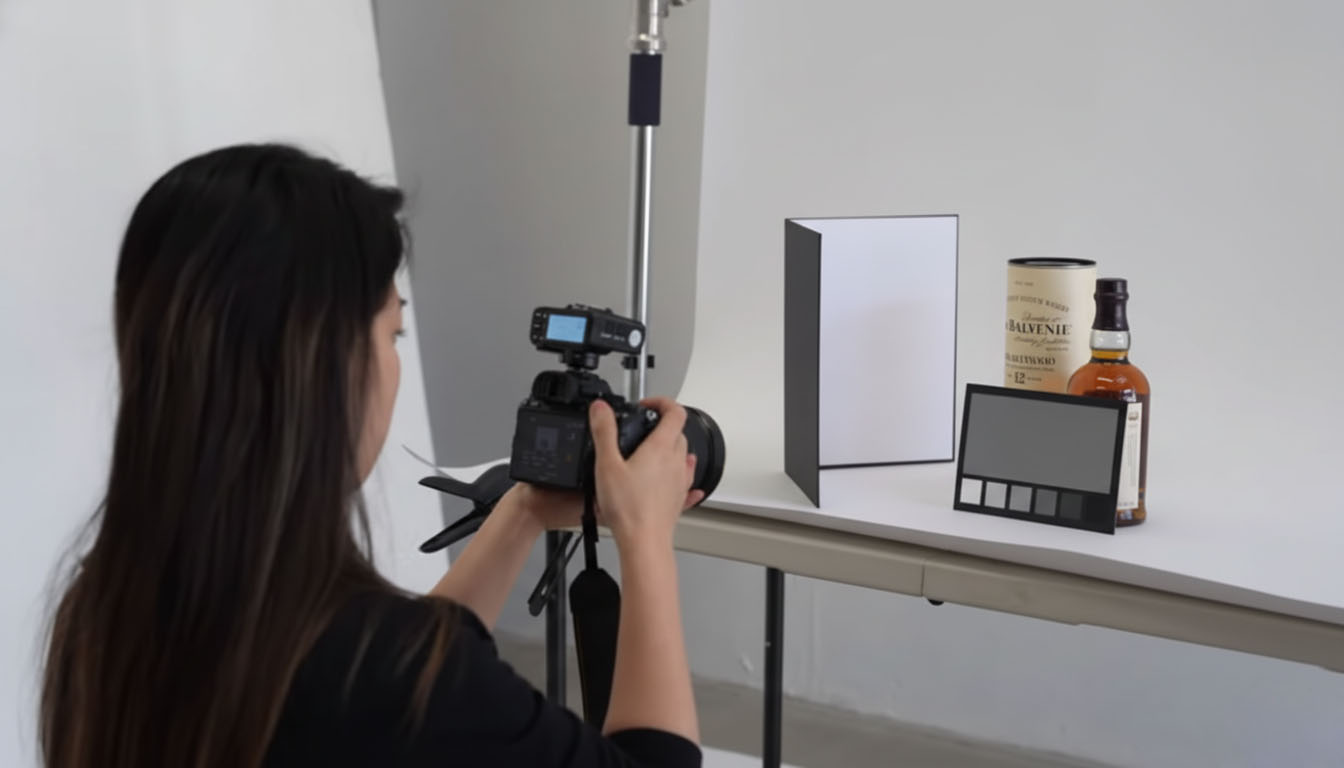
- White foam boards or silver reflectors help direct light onto your subject, minimizing harsh shadows and glare.
- Small clamps, diffusers, and light tents enhance control over reflections, especially when photographing glass, metal, or glossy surfaces.
2. Lighting Techniques for eCommerce Photography
Proper lighting is crucial. Even a high-end camera can produce flat, unappealing images under poor lighting conditions.
Studio Lighting
- Continuous Lights: Softboxes or LED panels provide steady lighting for consistent results.
- Strobe Lights: Ideal for professional studios with fast-paced shoots. They deliver strong illumination for larger products.
DIY and Budget-Friendly Solutions
- Use natural light from a window combined with white reflectors to evenly illuminate products.
- Tabletop setups with inexpensive lamps and diffusers can produce professional-quality images.
- Experiment with light angles to reduce shadows and highlight textures.
Controlling Reflections and Shadows
- Position reflectors opposite your primary light source to soften harsh shadows.
- Avoid direct light on reflective surfaces; use diffusers or shoot at an angle to prevent glare.
- For shiny products, subtle shadow creation adds depth and realism.
3. Composition and Backgrounds
The way you frame your products impacts both clarity and perceived value.
White Backgrounds vs Lifestyle Shots
- White Backgrounds: Standard for most eCommerce platforms; clean and distraction-free.
- Lifestyle Shots: Show products in use or within a real-world setting, helping customers visualize ownership.
Framing and Angles
- Capture multiple angles: front, side, top, and close-ups.
- Maintain consistent alignment and scale across all images.
- Follow the rule of thirds to enhance visual balance.
Using Props Effectively
- Props should complement, not overshadow, the product.
- For example, a small plant or minimal accessories can make lifestyle shots more engaging without distracting from the main item.
4. Post-Processing and Editing
Even the best-captured images benefit from post-processing. Editing enhances clarity, color accuracy, and professional polish.
Basic Edits
- Adjust white balance, exposure, and contrast.
- Crop and straighten frames for clean composition.
- Reduce noise and slightly sharpen the image.
Advanced Edits
- Background Removal: Essential for consistent product listings.
- Retouching: Smooth blemishes or imperfections without altering product authenticity.
- Shadow and Reflection Creation: Adds depth and a realistic feel.
Tools and Software
- Adobe Photoshop: Industry standard for advanced editing.
- Adobe Lightroom: Efficient for batch processing and color correction.
- Capture One Pro: Offers precise color management and professional-grade features.
- Luminar Neo / DxO PhotoLab: AI-assisted edits for speed and accuracy.
Pro Tip: Keep non-destructive layers to revert changes easily and maintain original image quality.
5. Building Your Photography Portfolio
A strong portfolio is your gateway to attracting clients.
Select Your Best Work
- Include diverse products: clothing, books, jewelry, electronics.
- Highlight both white-background and lifestyle shots to show versatility.
Online Presence
- Website: Use platforms like Squarespace or WordPress for a clean, professional layout. Include a portfolio page and contact information.
- Social Media: Instagram, Pinterest, and LinkedIn help showcase your work and attract potential clients.
Collect Reviews and Testimonials
- Offer small-scale services for free or at minimal cost to build initial credibility.
- Encourage clients to leave reviews on Google, Yelp, or your website.
6. Marketing Your Services
Even the best photographers need marketing strategies to grow their business.
Identify Your Target Clients
- Research niche markets: fashion, tech gadgets, home decor, jewelry.
- Look for businesses with underwhelming visuals—they are often more open to hiring photographers.
Outreach Strategies
- Cold emails: Include links to your portfolio and previous client reviews.
- Local businesses: Pet stores, wineries, or boutique shops often need high-quality images.
- Online platforms: Craigslist “Gigs > Creative” or photography forums.
Leverage Trends
- Follow leading brands and photography blogs.
- Curate inspiration boards on Pinterest or Instagram to stay updated on visual trends.
- Consider starting a photography blog to share expertise and attract clients.
7. Finding and Retaining Clients
Building relationships is key to long-term success.
Connect with Local Businesses
- Smaller companies are more likely to outsource photography.
- Present a professional proposal including portfolio, rates, and services.
Understand Client Needs
- Discuss preferred image styles, angles, and editing standards.
- Offer scalable packages, from single product shoots to bulk listings.
Deliver Consistent Quality
- Timely delivery and uniform editing style encourage repeat business.
- Use feedback to refine your workflow and maintain client satisfaction.
8. Creative Inspiration and Styles
Innovation sets you apart in eCommerce photography.
Research Leading Brands
- Observe how top fashion and lifestyle brands present products.
- Note lighting, composition, props, and post-production styles.
Curate Your Own Style
- Decide whether your focus is minimalistic, lifestyle-driven, or highly stylized.
- Combine lifestyle and white-background shots for versatility.
Utilize Online Platforms
- Pinterest: Create boards to collect style references.
- Instagram: Follow professional photographers and brand pages.
- eCommerce marketplaces: Study product listings for inspiration.
9. Tips for Sustainable Success
- Shoot in RAW format for maximum editing flexibility.
- Calibrate your monitor for accurate color grading.
- Batch process similar products to save time.
- Maintain a consistent visual style across all platforms.
- Archive high-resolution originals for future use.
Final Thought
eCommerce product photography in 2025 is both a creative art and a strategic business tool. By mastering equipment, lighting, composition, editing, and marketing, you can deliver visuals that not only showcase products but also drive sales. Building a strong portfolio, cultivating client relationships, and staying inspired are essential steps toward a sustainable, profitable photography business.
Investing time in professional post-processing, creative composition, and strategic marketing will ensure your images stand out in the crowded eCommerce space—turning casual viewers into loyal buyers.
Related Posts

How to Get Photography Clients for Your Ecommerce Business in 2025
People naturally prefer visuals over text; it's faster, clearer, and…
Product Photography Best Practices For Beginners In 2025
In the world of the competitive e-commerce landscape, compelling product…